

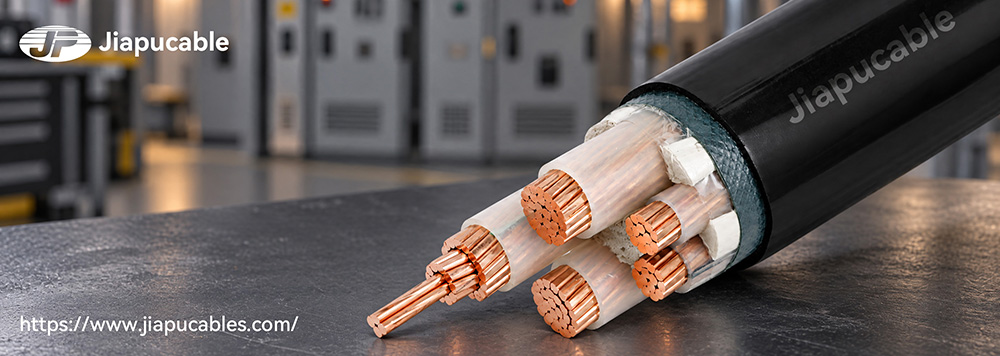
Modern power networks rely on stable end‑user power distribution for industrial, utility and infrastructure projects. Low‑voltage cables play a vital role in safely transmitting power between distribution branches and terminal electrical equipment. These cables are specially designed with a balance of usability, safety and stability to fit a wide range of general electrical applications. From residential buildings to production workshops, these low‑voltage wires and cables are engineered for consistent reliability to meet diverse power demands, delivering stable power supply with convenient maintenance.
Low‑voltage cables are designed to carry electric power at 0.6/1 kV and below. They serve as the link between main distribution lines and terminal loads, forming the fundamental component of wiring networks for buildings and equipment.
Key Features of LV Cables
- Operating voltage: 0.6/1 kV and below
- Made of well‑established insulation materials such as PVC, XLPE and LSZH (low smoke zero halogen)
- Good mechanical toughness and ageing resistance, with temperature tolerance suited to various environments
- Suitable for conduit installation, cable tray laying, direct burial or internal wiring inside equipment
Thanks to great versatility, low‑voltage power cable solutions cover a full range of types and are widely adopted across nearly all industries.
Low‑Voltage Cable Specifications
Engineers shall take various standards into careful consideration when selecting low‑voltage cables. Typical specifications include:
- Conductor material: copper or aluminium
- Insulation: PVC, XLPE or LSZH
- Rated voltage: 0.6/1 kV
- Armouring: non‑armoured, steel tape armoured or steel wire armoured according to site conditions
- Standards: IEC, BS, SANS and other international standards
Henan Jiapu Cable and other reputable low‑voltage cable manufacturers shall comply strictly with relevant standards to guarantee optimal cable performance and electrical safety.
Applications of Low‑Voltage Cables (LVC)
Low‑voltage cables are widely used for end‑power transmission in many sectors:
- Residential buildings: household wiring for lighting, sockets and home appliances
- Commercial complexes: continuous power supply for shopping malls, hotels, hospitals and office buildings
- Industrial plants: power supply for production machinery, control cabinets and assembly lines
- Renewable energy projects: internal wiring for PV combiner boxes and energy storage systems
- Infrastructure projects: municipal street lighting, auxiliary power for metro lines and supporting power systems at airports
Low‑voltage cables have long been an indispensable basic product for urban and rural electrification.
Benefits of Using Low‑Voltage Power Cables
There are many advantages in choosing the right low‑voltage power cables:
- High efficiency: stable power delivery with controlled transmission loss at the consumer end
- Durability: engineered to resist ageing and abrasion, adaptable to various ordinary environments
- Flexibility: compatible with multiple laying methods including conduit, cable tray and direct burial
- Long service life: capable of stable operation for many years with proper installation
- Safety & compliance: flame‑retardant and LSZH options available to meet global electrical and fire codes
Conclusion
Low‑voltage cables (LVC) form the terminal network of modern power distribution, supporting end‑user power supply for residential, commercial, industrial and municipal projects. From domestic wiring to factory power distribution and new‑energy supporting facilities, LVC delivers stability, safety and long‑term reliable performance for every electrical application.
Post time: Nov-16-2026